Key takeaways
- NOAA says explorers have seen less than 0.001% of the deep ocean seafloor, roughly the size of Rhode Island. As of April 2026, 28.7% of the seafloor had been mapped in high resolution.
- In 2026, scientists announced two big sets of discoveries from Schmidt Ocean Institute expeditions: 31 new midwater species off Brazil (June) and 57 new species and 5 new genera from an Argentine canyon (September).
- Expedition scientists describe new technology, including lasers, 3D imaging and genetic tests, that helped confirm new species in days instead of years.
- Finding them matters because we can’t understand or protect what we haven’t recorded.
This article is general science information based on NOAA, Ocean Census and Schmidt Ocean Institute sources.

How much have we actually seen?
The ocean covers about 70% of Earth’s surface, with an average depth of 3,682 meters (12,080 feet). NOAA’s Ocean Exploration program says that “the majority of our ocean is largely unknown.” Two numbers show why:
- Mapped: As of April 2026, 28.7% of the global seafloor had been mapped with modern high-resolution sonar, according to NOAA. The whole seafloor has been mapped by satellites, but NOAA says those maps give only a general picture. About 56% of the seafloor beneath US waters has been mapped to modern standards.
- Explored: NOAA says “we can’t say we’ve explored the seafloor until we’ve seen it,” and explorers have seen less than 0.001% of the deep ocean seafloor, “roughly the size of Rhode Island.” More than 90% of the ocean is deep ocean, deeper than 200 meters (656 feet).
New species from 2026: Brazil’s open water (announced June 2026)
Schmidt Ocean Institute’s research vessel Falkor (too) took an international team of midwater experts to the tropical South Atlantic off Brazil. The midwater is the space between the sunlit surface layer and the seafloor, which the institute calls “Earth’s largest and least explored habitable ecosystem.”
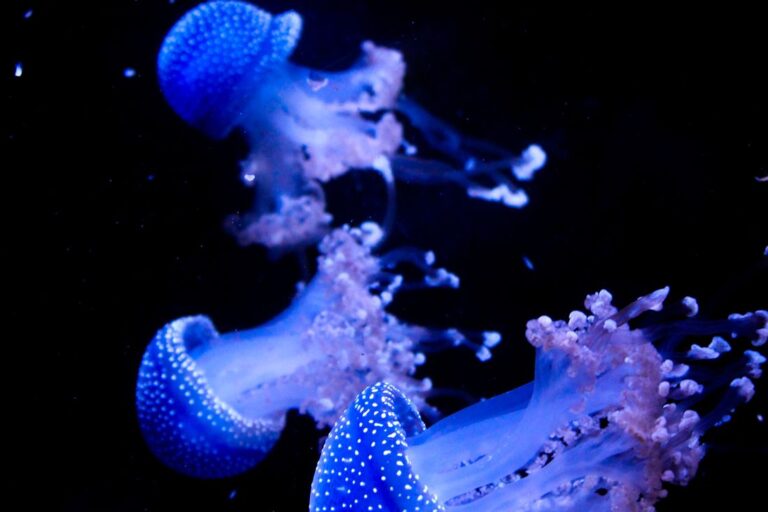
In two weeks the team reported 31 new species: an amphipod (a crustacean), a gossamer worm, nine jellyfish, seven siphonophores, seven comb jellies, four larvaceans (tadpole-like animals that live in mucus houses) and two giant rhizarians (single-celled organisms visible to the naked eye). The expedition’s chief scientist, Karen Osborn of the Smithsonian National Museum of Natural History, said the team saw far more diversity and abundance than expected, including glass squid and a pelagic octopus feeding on a bright red jellyfish.
Normally it can take scientists decades to identify and describe new species. Here the team used 3D laser imaging systems (DeepPIV and EyeRIS, built at MBARI), a shadowgraph camera and genetic analysis, and was able to confirm the species as new “within a matter of days.”
New species from 2026: an Argentine canyon (announced September 2026)
In July and August 2025, Schmidt Ocean Institute explored the Mar del Plata submarine canyon off Argentina, a canyon nearly twice as deep as the Grand Canyon, exceeding 3,500 meters. Live video from the dive drew more than 4 million viewers. A year later, in July 2026, 20 taxonomists and early-career researchers met in Buenos Aires to identify the specimens. Ocean Census, a global species-discovery program, reported:
- 57 new species and 5 new genera in two weeks of work.
- 20 new copepod species (tiny crustaceans). The team examined only about 10% of the copepod samples, and every specimen they examined was new to science.
- 22 echinoderms (sea cucumbers and sea lilies) and 14 cnidarians (corals and sea pens), plus one scaphopod mollusc.
- A sea cucumber nicknamed “Loki” (Peniagone sp.), found 2,577 meters deep and named for its horned appendages. It is one of up to 10 new sea cucumber species found.
What do these finds teach us?
- Discovery is limited by looking, not by luck. In the Argentine samples, every copepod examined was new. That shows how little of the deep sea has been catalogued.
- Technology is speeding things up. The Brazil team used lasers and 3D imaging to scan animals without collecting them, plus genetic tests. Expedition scientists say this approach could help “scalable exploration” in other oceans.
- Tools and people matter. The workshop in Buenos Aires trained early-career researchers in a field with few active specialists.
- It is hard to protect what we haven’t recorded. That is our own conclusion, not a claim from the sources, but the sources agree that the deep ocean’s life is poorly known.
A note on “new species”
Reports of new species announced at expeditions or workshops are an early step. Formal naming and scientific description in journals can take longer, and the Ocean Census release itself notes that some groups are awaiting genetic analysis. So treat counts like 31 and 57 as the scientists’ current identifications, not final lists.
Frequently asked questions
How much of the ocean has been explored? NOAA says explorers have seen less than 0.001% of the deep ocean seafloor.
How much of the seafloor is mapped? 28.7% in high resolution as of April 2026, according to NOAA.
What is the midwater? The ocean zone between the sunlit surface and the seafloor, described by Schmidt Ocean Institute as Earth’s largest and least explored habitable ecosystem.
Where were the 2026 discoveries made? Off Brazil (31 midwater species) and in the Mar del Plata canyon off Argentina (57 species, 5 new genera).
Information checked on: November 13, 2026. Counts and mapping figures are updated regularly.
Sources
- NOAA Ocean Exploration, “How much of the ocean has been explored?”
- Bigelow Laboratory for Ocean Sciences, “31 New Species Discovered in Two Weeks of Deep-Sea Exploration” (June 8, 2026, from Schmidt Ocean Institute)
- Ocean Census, “57 new marine species discovered in Argentina’s submarine canyons” (press release, September 2026)