Key takeaways
- NASA describes the blue planet HD 189733 b as having a hazy, blow-torched atmosphere with “clouds laced with glass.” It is a gas giant, not a place anyone could visit.
- A different planet, WASP-76 b, is suspected to rain iron. ESO astronomers say iron vapour on its hot day side is carried by winds to the cooler night side, where it condenses.
- These are indirect detections: astronomers read the planets’ light with instruments and infer the weather. They don’t watch rain fall.
- Studying such extremes helps scientists test how atmospheres work, including on Earth.
This article is general science information based on NASA and ESO sources.


A blue planet with glass in its clouds
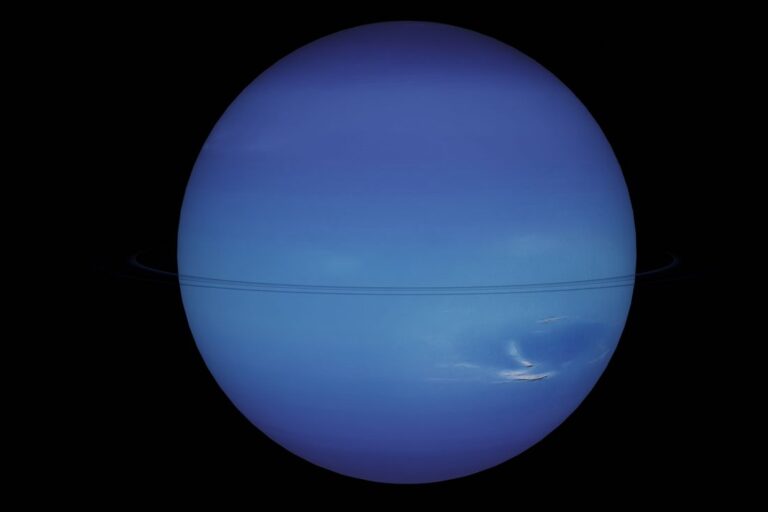
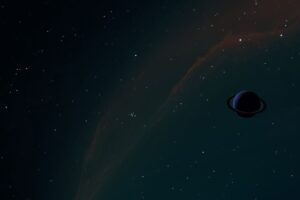
NASA’s exoplanet catalog describes HD 189733 b as a gas giant about 1.13 times the size of Jupiter, discovered in 2005. It circles its star in only 2.2 days, at about 0.03 times the Earth–Sun distance. NASA says the planet’s “cobalt blue color comes from a hazy, blow-torched atmosphere containing clouds laced with glass.” Its warning to readers: “This far-off blue planet may look like a friendly haven – but don’t be deceived! Weather here is deadly.”
Where does “glass rain” come from? Popular stories say that glass falls sideways in winds of thousands of miles an hour. Those details come from a 2013 NASA announcement, and the research summaries we found suggest the original wording was more cautious than the headlines, using words like “possibly.” We could not open that release ourselves, so this article only uses what NASA’s own catalog page says: glass-laced clouds and a blue colour.
A planet where it may rain iron
ESO, the European Southern Observatory, announced in March 2020 that astronomers using its Very Large Telescope in Chile “suspect it rains iron” on WASP-76 b. The study was published in the journal Nature. Here is the story as ESO tells it:
- The planet is an ultra-hot giant about 640 light-years away in the constellation Pisces.
- It is “tidally locked,” like the Moon around Earth: the same face always points to its star. The day side is above 2,400 degrees Celsius, hot enough to vaporise metals such as iron. The night side stays dark and cooler, around 1,500 degrees Celsius.
- The big temperature gap drives vigorous winds that carry iron vapour to the night side, where it condenses into droplets and rains down.
- The team saw a strong signature of iron vapour at the evening edge between day and night, but not in the morning. The lead researcher, David Ehrenreich of the University of Geneva, said that is because “it is raining iron on the night side.”
How do astronomers “see” weather light-years away?
They can’t see raindrops. Instead, as the planet moves, its atmosphere filters the starlight. A spectrograph splits the light into its colours, and each chemical leaves a fingerprint. In this case the instrument was ESPRESSO, on ESO’s Very Large Telescope, and the result came from its very first science observations in September 2018. If iron shows up on one edge of the planet and not the other, scientists infer where it is and where it is gone.
ESO calls this “a whole new way to trace the climate of the most extreme exoplanets.”
Why this matters
NASA says it has confirmed more than 6,000 exoplanets, with compositions ranging from rocky to gas-rich, and has identified lava worlds covered in molten seas and puffy planets with the density of Styrofoam. Each strange world is a test case for our understanding of clouds, winds and heat flow. The same physics shapes weather on Earth, so surprises elsewhere help sharpen our models.
Frequently asked questions
Does it really rain glass on another planet? NASA describes HD 189733 b as having glass-laced clouds. Details of how any glass falls are less certain than popular stories suggest.
Is the iron rain confirmed? ESO and the researchers say they “suspect” it, based on the chemistry seen on the planet’s two sides.
Could humans ever visit? NASA says even the closest known exoplanet is about 4 light-years away. These two planets are far beyond that (WASP-76 b is about 640 light-years away).
Why is HD 189733 b blue? NASA attributes it to a hazy, hot atmosphere containing clouds laced with glass. It is not an ocean.
Information checked on: November 13, 2026.
Sources
- NASA Science, HD 189733 b exoplanet catalog entry
- NASA Science, Exoplanets overview
- ESO, “ESO Telescope Observes Exoplanet Where It Rains Iron” (11 March 2020)