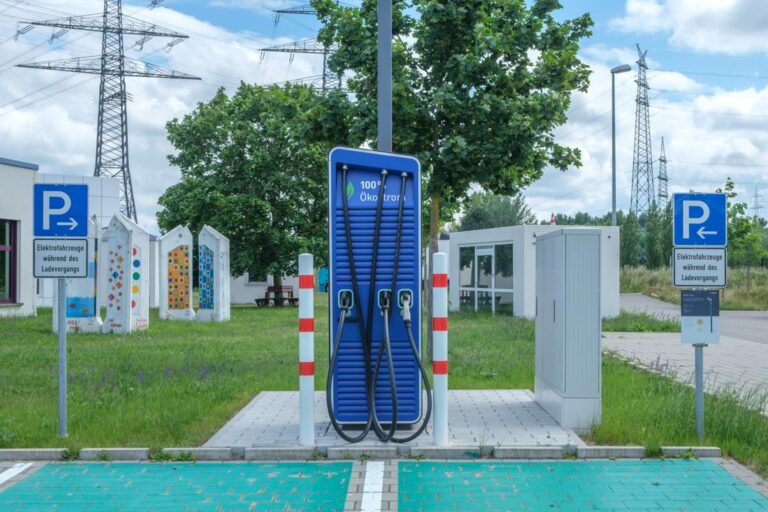
If you are thinking about an electric vehicle, charging is the biggest thing to understand. The US Department of Energy’s Alternative Fuels Data Center explains the three charging levels, the plugs and how to find a station.
Key takeaways
- Level 1 plugs into a regular 120-volt outlet and adds about 5 miles of range per hour.
- Level 2 uses 240 or 208 volts and adds about 25 miles of range per hour.
- DC fast charging adds about 100 to 200 or more miles of range in 30 minutes, depending on the car and charger.
- Most EV drivers charge at home overnight.
The three levels
- AC Level 1: about 5 miles of range per hour (assuming 1.9 kW), using a 120-volt household outlet. Most EVs come with a portable Level 1 cord. For example, 8 hours gives about 40 miles of range for a mid-size EV.
- AC Level 2: about 25 miles of range per hour (units range from 2.9 to 19.2 kW). Homes typically use 240 volts and businesses 208 volts. Most home Level 2 units run at up to 30 amps and deliver 7.2 kW, and the Department of Energy says these need a dedicated 40-amp circuit.
- DC fast charging (sometimes called Level 3): about 100 to 200 or more miles of range per 30 minutes. Units can deliver up to 500 kW, and the speed depends on the vehicle and how full the battery already is.
Overall, charging can take under 20 minutes with a fast charger to 20 hours or more with Level 1, depending on the battery and equipment. The fueleconomy.gov site says a full recharge can take 3 to 12 hours and a fast charge to 80 percent about 30 minutes.
The plugs
- J1772: used for Level 1 and Level 2.
- CCS (Combined Charging System): one port that takes Level 1, Level 2 and DC fast charging. The Department of Energy says most EV models on the market use it.
- CHAdeMO: a DC fast connector common on cars from Japanese makers.
- J3400 (NACS): a standard based on Tesla’s design that works at all levels. At the time the page was written, only Tesla vehicles had it, and several makers had announced plans to adopt it. Adapters are available.
Charging at home
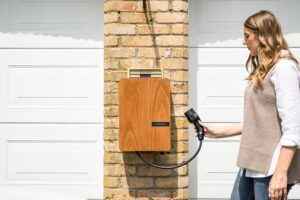
Most EV owners charge overnight at home. Level 1 can be enough if a suitable outlet is nearby. Level 2 suits longer commutes, larger batteries or irregular schedules. The Department of Energy recommends safety-certified equipment (such as ENERGY STAR labelled products) and a certified electrical contractor, notes that permits may be required, and says some homes need extra electrical capacity. Home charging typically costs less than public charging.
Charging in public
Public charging is usually Level 2 or DC fast charging, at places such as shopping centres, airports, hotels, government offices and along highways. The Alternative Fuels Data Center has a station locator that covers public and private stations in the US and Canada and can map a route, with apps for iPhone and Android.
Cold weather and other questions
Cold weather lowers range; see why electric car range drops in cold weather. To compare EVs with hybrids and gas cars, see hybrid vs plug-in vs electric vs gas.
Frequently asked questions
How long does an EV battery last? The Department of Energy cites a study estimating 12 to 15 years in moderate climates and 8 to 12 years in severe climates. A replacement can be costly.
Do I need a Level 2 charger at home? Not always. It depends on how far you drive and how fast you need to recharge.
This article is general information based on information from the US Department of Energy. It is not personal medical, legal or financial advice. Talk to a qualified professional about your situation.
Information checked on November 17, 2026.
Sources
US Department of Energy, Alternative Fuels Data Center, “Electric Vehicle Charging Stations,” “Charging Electric Vehicles at Home,” “Charging Electric Vehicles in Public” and “Electricity Basics”; fueleconomy.gov, “All-Electric Vehicles.” The pages show no update date, and charging technology is changing quickly. Photos are stock images for illustration.