High blood pressure usually causes no symptoms, so the only way to know your numbers is to measure them. The CDC and the National Heart, Lung, and Blood Institute (NHLBI) both say this. The NHLBI adds that about 1 in 3 US adults with high blood pressure do not know they have it. Here is how to read the numbers and check them properly.


Key takeaways
- Blood pressure has two numbers, written like 120/80 mm Hg. The top number (systolic) is the pressure when your heart beats. The bottom number (diastolic) is the pressure between beats.
- Under 120/80 is normal. High blood pressure begins at 130/80, according to the CDC, the American Heart Association (AHA) and the NHLBI.
- Only a doctor or other medical professional can diagnose high blood pressure. It can take several readings over more than one visit.
- A reading above 180/120 needs prompt action. With symptoms such as chest pain, call 911.
The blood pressure categories
The three organisations use the same thresholds (in mm Hg):
- Normal: top number under 120 and bottom number under 80.
- Elevated: top number 120 to 129 and bottom number under 80.
- Stage 1 high blood pressure: top number 130 to 139 or bottom number 80 to 89.
- Stage 2 high blood pressure: top number 140 or higher or bottom number 90 or higher.
- Above 180 and/or above 120: the top tier. See “When to get help” below.
How to take an accurate home reading
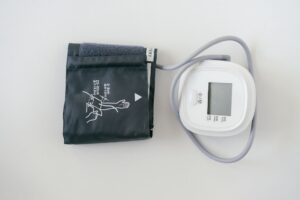
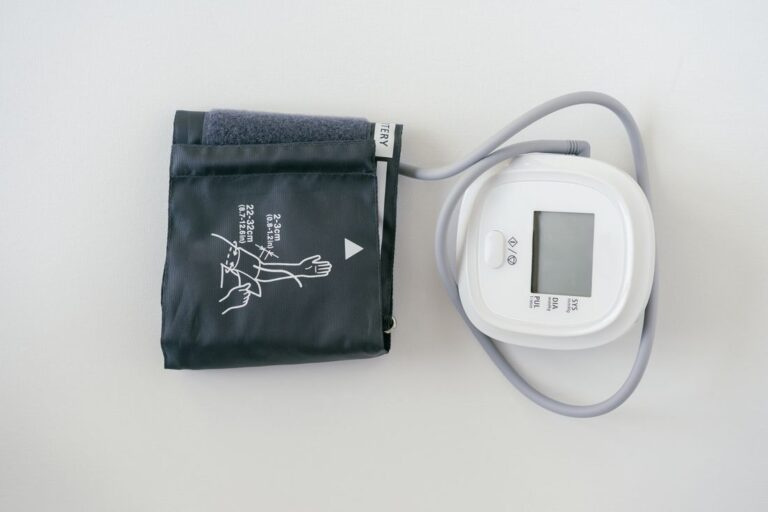
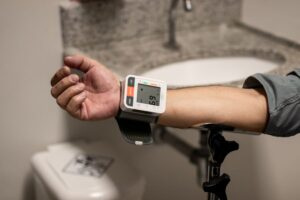
The CDC says to use a personal monitor and to take at least two readings, one or two minutes apart, at the same time each day, and to keep a log. For an accurate reading:
- Do not eat or drink anything for 30 minutes beforehand, and empty your bladder.
- Sit with your back supported for at least 5 minutes, feet flat and legs uncrossed.
- Rest your arm at chest height with the cuff on your bare upper arm.
- Do not talk during the reading.
Things that can push a reading up include nervousness (the “white coat” effect, which the CDC says may affect as many as 1 in 3 people), smoking, alcohol, caffeine or exercise within 30 minutes, and crossed legs. You can also get checked at a doctor’s office or at a pharmacy with a digital monitor. The CDC says a health professional can show you how to use a monitor correctly and how often to measure. The NHLBI recommends checking at least once a year.
When to get help
- If you think you have high blood pressure, or you were told you do and it is not under control, talk with your health care team right away (CDC).
- If a reading is above 180/120, the AHA says to wait one minute and measure again. If it is still that high and you have no symptoms, contact your health care professional.
- If it is above 180/120 and you have symptoms such as chest pain, shortness of breath, back pain, numbness, weakness, a change in vision or difficulty speaking, call 911.
What can help
The CDC and NHLBI list about 30 minutes of physical activity most days, not smoking, limiting salt and alcohol, a healthy weight, managing stress and good sleep. Some people also need medicine, which a doctor decides. For an easy start, see our guide to the 10-minute walking habit.
Frequently asked questions
Is 130/80 considered high? Yes. The CDC, AHA and NHLBI start stage 1 high blood pressure at 130 on top or 80 on the bottom.
Can I feel fine and still have high blood pressure? Yes. It usually has no symptoms.
Do I need a home monitor? The CDC says a validated home monitor may be recommended to help confirm a diagnosis. Ask your doctor.
This article is general information based on guidance from the CDC, the AHA and the NHLBI. It is not personal medical, legal or financial advice. Talk to a qualified professional about your situation.
Information checked on November 17, 2026.
Sources
Centers for Disease Control and Prevention (CDC), “About High Blood Pressure” and “Measuring Your Blood Pressure” (updated October 13, 2026); American Heart Association, “Understanding Blood Pressure Readings” (reviewed August 14, 2025); National Heart, Lung, and Blood Institute, “What Is High Blood Pressure?” (updated April 25, 2024). Photos are stock images for illustration.
Health note: this article is for general information and is not medical advice. Speak to a qualified health professional about your own situation.